P&O Cruises' Iona to Homeport in St Kitts From November 2027

Basseterre is expected to become a turnaround port for P&O Cruises' Iona from November 2027, giving St Kitts a bigger role in Caribbean fly-cruise operations and related hotel, airport and provisioning business.

By St Kitts and Nevis
84 views
3 min read
Share:

P&O Cruises' Iona is expected to begin homeport operations in Basseterre from November 2027, giving St Kitts a more central role in Caribbean fly-cruise itineraries. If the plan moves ahead as outlined, Basseterre would handle embarkation and disembarkation rather than serving only as a day-stop port, increasing the need for terminal, transfer and hotel capacity around each sailing.

Key Takeaways

  • Start date: Turnaround operations are expected from November 2027.
  • Port role: Basseterre would move from a standard port-of-call stop to a homeport-style turnaround function for embarking and disembarking passengers.
  • Ship scale: Iona is an Excel-class ship, and the wider network also references sister ship Arvia.
  • Commercial impact: Homeporting can support more hotel nights, airport transfers, ground transport and local provisioning than a typical cruise call.

Basseterre would become a turnaround port

P&O Cruises has positioned St Kitts within its Caribbean fly-cruise planning, with Basseterre expected to act as an embarkation point for Iona from late 2027. That is a meaningful shift because turnaround ports deal with passenger arrivals, departures, baggage and pre-boarding logistics, which usually means longer ship stays and a bigger local operating footprint.

Port Zante infrastructure is central to the rollout

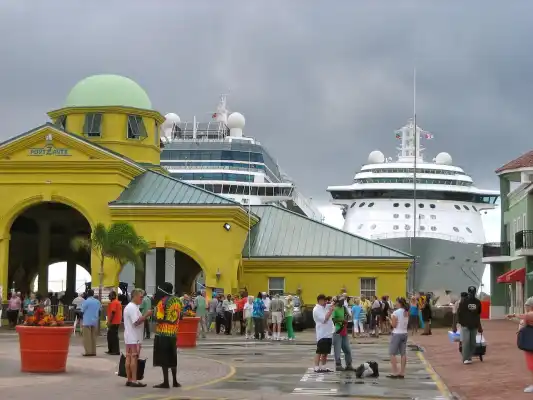
To support that change, the build-out at Port Zante is expected to focus on high-volume passenger handling rather than only short-visit cruise traffic. The main operational priorities are likely to include baggage flow, customs processing and smoother transfers between Robert L. Bradshaw International Airport and the port.

  • Terminal focus: A dedicated homeporting setup would need faster check-in and baggage handling than a normal call-day layout.
  • Airport connection: Efficient airport-to-ship transfers will be critical if fly-cruise packages are to work smoothly.
  • Phased delivery: Infrastructure and operations are expected to ramp up ahead of full commercial activity.

Why it matters for the local economy

Homeporting can bring a different kind of cruise business to St Kitts. Instead of relying mainly on day visitors who leave with the ship, the island can target pre- and post-cruise stays, higher spending around embarkation days and a broader set of supplier relationships tied to provisions, transport and hospitality.

  • Cruise-and-stay opportunity: Hotels and guest accommodation could benefit if passengers arrive early or remain after sailing.
  • Local supply chain: Ships taking on goods and services locally would create more direct commercial spillover than a brief call.
  • Tourism strategy: The move fits a higher-value visitor model rather than a simple focus on passenger volume alone.

Airlift remains part of the equation

The St Kitts homeport strategy depends heavily on reliable UK air access. Existing London Gatwick service provides a practical bridge for Caribbean fly-cruise demand, and that air connection is one reason Basseterre can be positioned as an alternative embarkation base within the region.

  • UK demand: British passengers are a natural fit for fly-cruise itineraries built around St Kitts.
  • Regional diversification: Using St Kitts alongside more established hubs could spread traffic and refresh itinerary planning.
  • Longer-term upside: If the model works, the island could strengthen its case for more cruise homeport business in future seasons.

Related Articles